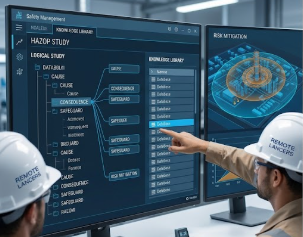
Managing process safety in a high-risk industrial environment requires meticulous attention to detail. When engineering and operations teams conduct a Process Hazard Analysis (PHA) or a Hazard and Operability (HAZOP) study, they map out every potential cause, consequence, and safeguard for a facility.
Historically, these massive studies were recorded on fragmented, manual spreadsheets. This outdated approach risks valuable corporate knowledge getting lost, workflows becoming inconsistent, and safety teams wasting hundreds of hours copying repetitive data.
To bring consistency and speed to safety compliance, major enterprises use purpose-built software like Sphera's PHA-Pro. This platform transforms how organizations manage risk by turning a tedious compliance exercise into a streamlined, knowledge-based operation.
Moving Beyond General Spreadsheets to Purpose-Built Software
Using standard spreadsheet tools for complex risk studies causes massive operational friction. PHA studies require evaluating "one-to-many" relationships—where a single failure cause could trigger multiple cascading consequences and require completely different safeguards.
A dedicated risk management system handles these complex relationships natively. Instead of wrestling with rows and columns, safety chairs can easily link dynamic data, copy repetitive risk criteria instantly, and drag operational elements seamlessly from one node to another while maintaining total data integrity.
Core Features That Drive Engineering Efficiency
When planning internal software setups or deploying specialized risk tools, modern industrial platforms focus on a few critical architectural elements to maximize team efficiency:
1. Comprehensive Knowledge Libraries
One of the biggest leaks in industrial engineering is "reinventing the wheel." Modern risk tools allow organizations to build on previous evaluations. By maintaining a centralized database of past events and historical risk studies, teams protect their internal intellectual property and ensure new facility designs learn from historical field data.
2. Dynamic Linking and Advanced AutoType
Engineering studies are highly repetitive. Advanced risk platforms use predictive typing and dynamically link charts directly to live worksheets. This means if a safeguard or risk rating is updated in one analytical view, the change propagates across the entire study automatically, eliminating manual entry errors.
3. Cross-Platform Reporting and Multi-Language Support
Enterprise risk data must be accessible to various global stakeholders. High-performing risk tools provide full right-to-left multilingual data entry (RTL) and generate professional, exportable compliance reports in HTML, Microsoft Word, and Excel formats to make regulatory auditing completely frictionless.
Scaling Your Risk Infrastructure Safely
Deploying enterprise risk software across corporate networks requires an IT setup that prioritizes data security and stability. Modern technical architectures—relying on fast frontend designs like Next.js and robust cloud backends—ensure internal safety databases sync seamlessly across global office nodes without operational latency.
By migrating away from legacy, manual logs and deploying specialized, automated risk frameworks, engineering firms can significantly reduce project overhead while improving the absolute accuracy of their compliance modeling.
Looking to optimize your engineering workflows, configure enterprise database architectures, or integrate custom reporting tools for your organization? On RemoteLancers.com, we connect enterprise clients with experienced full-stack engineers, backend developers, and technical implementation experts who specialize in internal business infrastructure. Post your project scope today to collaborate with top-tier technical professionals.